BLOG

PORK FRIED RICE

Fried rice is simple to make and very delicious. One of my favourite fried rice dishes is Thai chicken fried rice, the seasoning and ingredients are very basic but the dish is full with flavours. The same goes for Cambodian garlic fried rice which uses salt mixed with water as the seasoning.

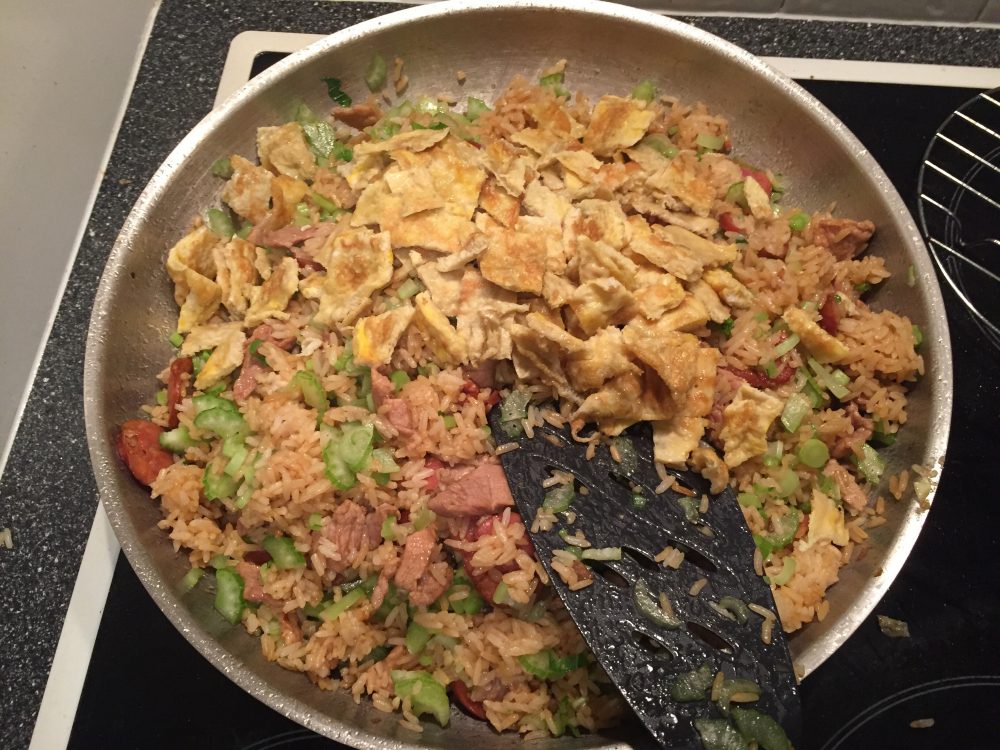
The pork fried rice recipe I’m going to share with you is my mum’s signature fried rice ‘Special fried rice’. The ingredients are a bit more complicated, but the flavour is unforgettable. There  is a type of sweet pork sausage we have in Cambodia (or Chinese sausages in the West) that is often eaten with soy sauce and rice. This sausages gives the fried rice a very unique flavour.

Note: the secret to having the best-fried rice at home is all in the rice. When cooking rice for fried rice you want the rice to be a bit drier than the rice you would normally cook (we call this crunchy rice, even though it’s not physically crunchy). To obtain this texture, reduce a small amount of the water used to cook the rice, however don’t reduce too much water or the rice will be too dry and raw.  

Another option to reach the desired effect is to use left over rice. Because the left over rice has been refrigerated, the rice is drier the next day so it’s best for fried rice. The reason we cook the rice a bit drier than it normally is because if the rice is soft, the fried rice will be soaky and sticky. The flavour will be different and it’s less presentable.

You can find the sweet sausages in Chinese, Thai and maybe in Vietnamese markets. If they are not available don’t worry! Substitute the sweet sausages with chorizo it works well.
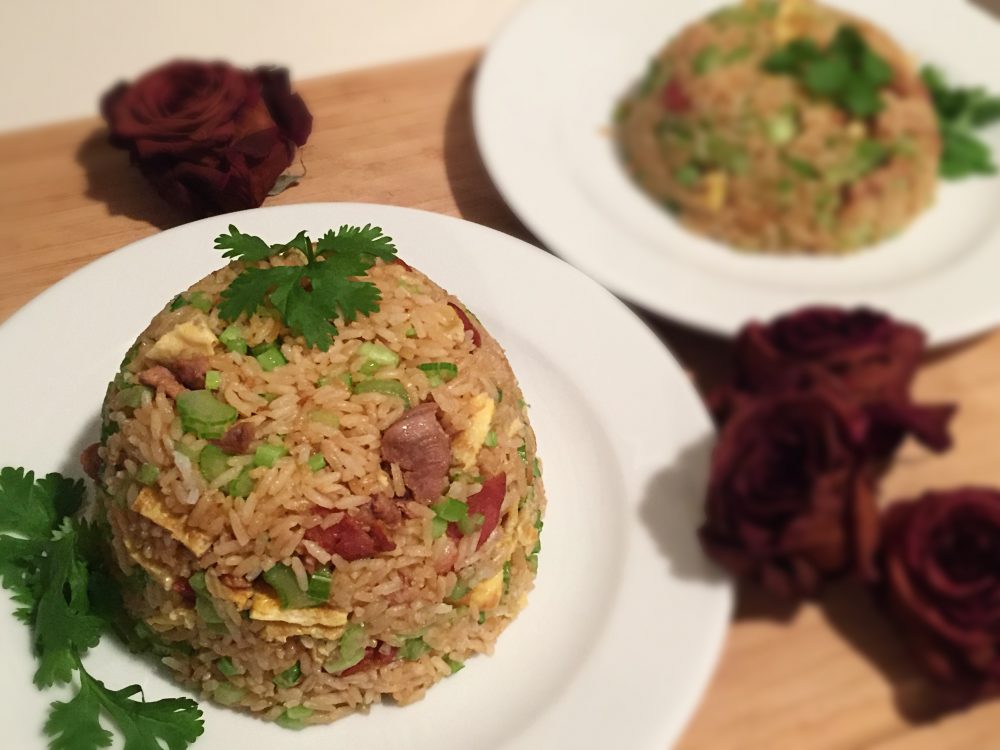

PORK FRIED RICE

Prep-Time: 20 mins                 Serve: 5

Cooking Time: 13 mins

Ingredients 

2 cups steamed jasmine rice for 2-3 servings   

1 bunch choy sum stork, chopped into small pieces

5 spring onions, chopped into small pieces

2 -3 Chinese sweet pork sausages (if available) Or 1 1/2 chorizo sausages, thinly sliced

3 eggs

200g lean pork, stir-fry sliced

5 tbsp oil

2 tbsp soy sauce

2 tsp sugar

1/2 tsp salt

4 cloves garlic, minced

Method 

Cook the eggs into a plain omelette and cut them into small pieces and then set aside.

Heat the oil in a wok over medium heat, once the oil is heated add in the  garlic and cook for 5 minutes or until the garlic starts to fragrant and turns golden brown.

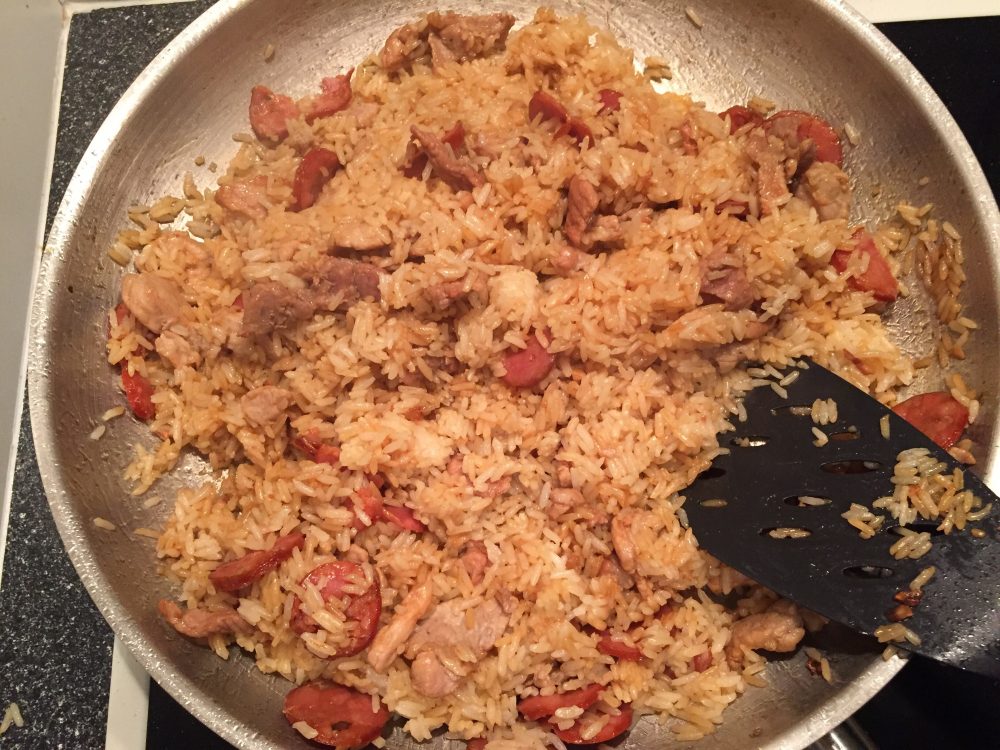
Add in the meat and sausages followed by all of the seasonings. Stir to combine and cook until the pork turns completely white.


         

Add in the rice and stir to separate for 3-5 minutes until well mixed with the seasoning and starting to dry in the wok. If its too dry add in a bit more oil.
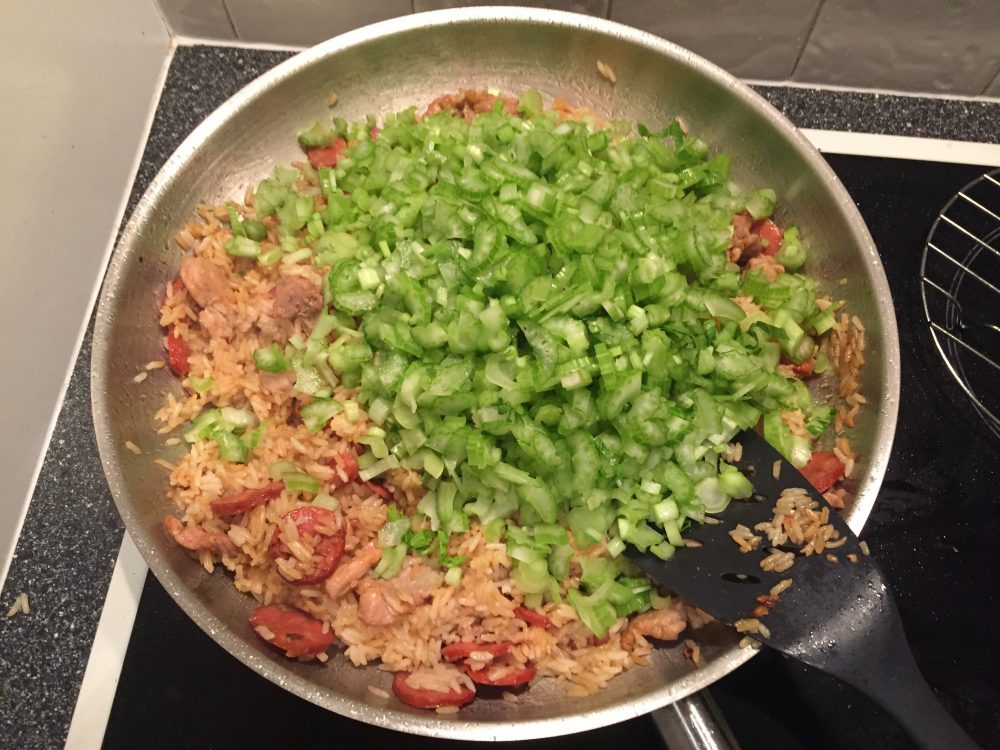
Toss in the choy sum stork, spring onion and cooked eggs. Mix the fried rice with the vegetables for 3 minutes or until the vegetables start to wield. Taste to see if it’s salty enough and adjust the seasoning to your liking.


GOURMET BURGER

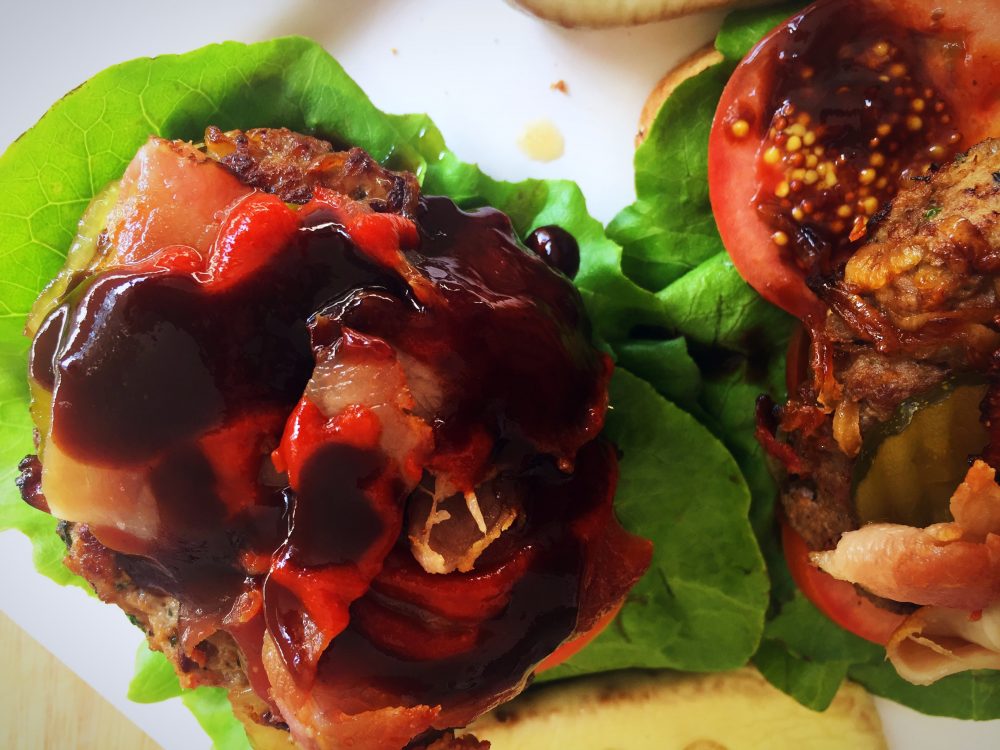
I’ve shared a lamb burger recipe before sometime last year, before I lost all my post. I was having a homemade burger again so I thought why not share this one too. This recipe is a bit different from the one I made before, so if you’re looking for a delicious burger made at home please do give this recipe ago.

Note: making homemade burgers are a lot healthier than most burgers sold outside. In this recipe I pan seared the lamb patty to get the colour and then put it in the oven to finish up. The reason I did this was because I added caramelised onion and sun-dried tomatoes into the lamb mince so because of these ingredients the outside of the patty cooked really fast and could easily burn. Cooking them in the oven helps to cook the patty more evenly without burning the outside too much. However you can cook your patty anyway you prefer. 

I love adding herbs, fresh or dried into my burger mince to give the patty more fragrant and flavour, but it’s optional so leave them out if you don’t like their smells. I find lamb mince more flavourful than beef or pork therefore I always use lamb mince to make my burgers, but you can use any meat that you like. 


GOURMET BURGER

Prep-Time: 10 mins                 Serve: 2

Cooking Time: 20 mins

Ingredients

300g lamb mince

1 onion, sliced

4 pieces sundried tomato chopped

1 clove garlic, mince

1 1/2 tsp honey

oil

1 fresh dill, minced

4 fresh thyme leaves

4 coriander, minced

Salt and pepper to taste

for the burger

2 slices cheese

6 lettuce leaves

4 slices bacon, cooked to crispy

1 tomato, sliced

sauces of your choice 

6 slices cucumber pickled

4 slices of bread/2 bread rolls

Method 

In a frying pan, caramelise the onion with the honey and garlic and then leave it to cool.

In a medium sized mixing bowl combine the lamb mince with the herbs, sun-dried tomatoes, the caramelised onion, salt and pepper. Mix the mixture until well combined.

Split the mixed mince in to two parts and make them into 2 burger patties.

Cook the bacon until crispy and set a side. Preheat the oven on 220°C Fan Force.

Cook the patty in the same frying pan that you used to cook the bacon on medium high heat. Once both of the sides of the patty are cooked on the outside layer, transfer the patty into a baking dish and cook it in the oven for 15 minutes.

Line the bread and cheese in a different baking tray. Put them in the oven and allow them to heat until the cheese melts.

Remove from the oven and prepare your burgers with the remaining ingredients.


STIR-FRY FISH WITH GINGER

This recipe brings back a lot of childhood memories for me. I’ve always loved stir-fry ginger, but I don’t remember liking this dish when there’s no coriander leaves as a topping. One thing I find interesting in life is that as we grow up we sometimes end up liking what we didn’t like to eat when we were younger. I remember not liking one of the most delicious Cambodian soups as a child and often complained about it when my mum made the dish, but now that I’m older I miss the traditional ways of making it and can’t really have enough of that soup.

There are few dishes that use ginger and meat, poultry or fish as the main ingredients. So when a ginger dish is cooked you will see a bowl of ginger and the meat it’s cooked with. I love those dishes so I don’t quite understand myself why I didn’t like this one. Well it’s good thing that I love it now!

This stir-fry ginger dish is very simple to make. The only part of the preparation that might take up a bit of time is cutting the ginger down in to smaller pieces, but if you have a grater that can grate the ginger in to thicker pieces than the usual type graters then it would be fantastic! It would certainly save a lot of time for those that have a busy lifestyle. I personally don’t mind spending time cutting the ginger though, I just like the way we do it traditionally.

Note: when grating ginger for this dish, I recommend using the grater side that would make a bigger strip because when cooking ginger, it can brown easily and often go dry when the ginger is grated too thin and small. 

Cooking ginger can soak up a bit of oil so keep in mind not to add too much oil otherwise at the end you will see lots of oil floating on top in the serving bowl. It’s a Cambodian traditional when cooking ginger dishes that we always cook the ginger first to soften it and to get rid of the raw hotness before adding in the preferred meat and seasoning to finish up the dish. So it’s a bit different from cooking other vegetables with meat where we would generally cook the meat first before adding in the vegetables and ending up with meat that is properly cooked and vegetables that will still have a crunchy texture. 


STIR-FRY FISH WITH GINGER

Prep-Time: 20 mins                 Serve: 4

Cooking Time: 15 mins

Ingredients

2 snapper fillets, cut into big cubes

200g ginger root, peeled and cut into thin strips

1  carrot, thinly sliced

1/2 bunch coriander leaves

1 tsp sugar

1 chicken stock cube

1/2 tsp salt

1/2 tbsp fish sauce

3 garlic cloves, minced

4 tbsp oil

1/2 cup water

Method

Heat the oil in a wok on medium heat and then add in the ginger once it’s nice and hot. Occasionally stir the ginger to prevent it from sticking to the wok and cook the ginger for about 10 minutes or until all of the raw ginger becomes soft and cooked.


You can remove the cooked ginger from the wok or just push them to one side of the wok so that about 75% of the wok space will be available for cooking. Add 1 tbsp extra of oil into the wok and then add in the garlic and cook the garlic until fragrant or turns golden.


Add in the fish, all of the seasoning and 1/2 cup of water and then cook for 5 minutes or until the fish turns completely white and cooked through. Return the cooked ginger to the wok and stir to combine with the fish, take care not to break the fish by stirring it gently.


Add in the carrots and stir until the carrots pieces become cooked. Remove from the heat and transfer into a serving bowl. Top the bowl with coriander leaves and serve with steamed rice.


CHINESE BROCCOLI STIR-FRY

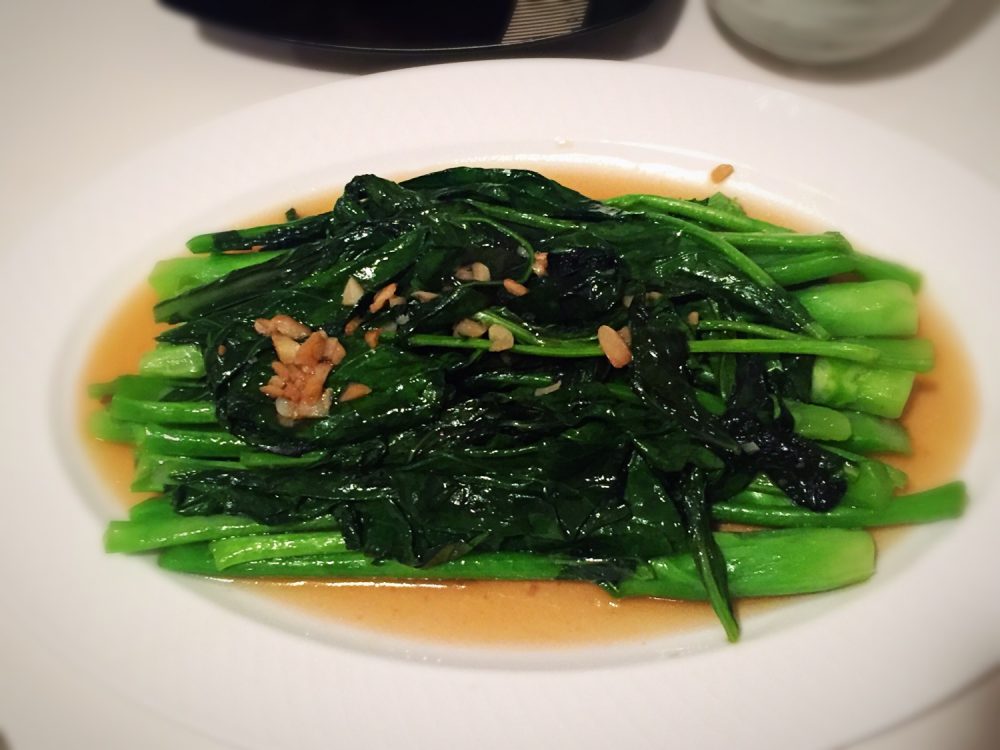
Stir-frying vegetables are very quick, simple and delicious. Chinese broccoli stems are crunchy raw or cooked and have many applications in asian cooking. Chinese broccoli is predominately added to stir-fry dishes for both home cooked meals and street food. The vegetable has thick stems with glossy grey-green leaves, unlike the regular broccoli they grow small white flowers. The flower stems grow from the centre of the plant with the attached younger leaves, they are usually between 1-2 cm in dimension and about 15-20cm long. The flower stems are harvested and sold in bunches like the rest of the plant and are used in the same cooking as the plant.

The method and ingredients used to stir-frying vegetables are often the same across many different vegetables. Though the ingredients can be the same, depending on the vegetables used in the dish the  flavour is completely different.  The reason I love this dish is because it’s very simple to make, its nutritious and can be eaten as a side or a main dish with a few other dishes.

Note: This dish can be either a vegetarian dish or a non-vegetarian dish. The usual ingredients added to the dish are oyster sauce and chicken stock, this is the non-vegetarian version of the dish. To make the vegetarian version of the dish, the oyster sauce and chicken stock are remove and replace with soy sauce and vegetable stock. 

There are two ways to make this stir-fry. The first one is to stir-fry the raw vegetables in oil and seasoning, this method will take a bit longer for the vegetables to cook and may take time for the liquid to excess from the vegetables. The other method of making this dish is the method I use to make the dish, so instead of adding the raw vegetables into the wok I will be boiling the vegetables for 2 minutes in boiling water. This will soften the leaves and allow it to cook faster in the wok with more moisture. Use either method.


CHINESE BROCCOLI STIR-FRY 

Prep-Time: 15 mins                 Serve: 2-4

Cooking Time: 5 mins

Ingredients 

2 bunch Chinese broccoli, outer skin remove at the bulb

3 cloves garlic

1 tsp sugar

1/s tsp salt

1 tbsp soy sauce

1 cube stock powder

5 tbsp oil

Boiling water

Method

Add the Chinese broccoli into the boiled water and leaves to poach for 2 minutes or until the leaves soften. Drain and rinse thoroughly then set aside.

Heat the oil in a wok over medium high heat, add in the garlic once the oil is hot. Stir to cook the garlic until they give out fragrant and then change colour.

Add in the drained Chinese broccoli followed by all of the seasonings. Stir to combine and allow the seasoning to dissolve. Once the broccoli is nice and coated with the sauce, remove the wok from the heat. Transfer on to a serving plate and serve with rice or any other dish of your choice.


BAKED POTATOES FENNEL SALAD


Potatoes can be healthy and delicious especially when cooked the right way. I’ve heard rumours saying that potatoes are very bad for you because the plants produce solanine which is poisonous, but so does eggplant, tomatoes and peppers who are also from the Solanaceae family. Potatoes are nutritious and are very good for your digestion especially when eaten raw or semi cooked, the only time you should worry about eating potatoes is when they turn green so when this happens do not eat them.

In my country, the typical potatoes that you find in your local supermarket weren’t available until 10 years ago. Only Kasawa and different varieties of sweet potatoes were available before then and they were only eaten when made into deserts and snacks. Unlike the regular potatoes, sweet potatoes are different because they came from the Convolvulaceae family with flowering morning glory vines for most types. The leaves are very nutritious and often used in soups. Although sweet potatoes are placed in the superfood category and often eaten by healthy eaters, they aren’t that different in nutrients compared to the regular potatoes, both are delicious and nutritious in their own ways.

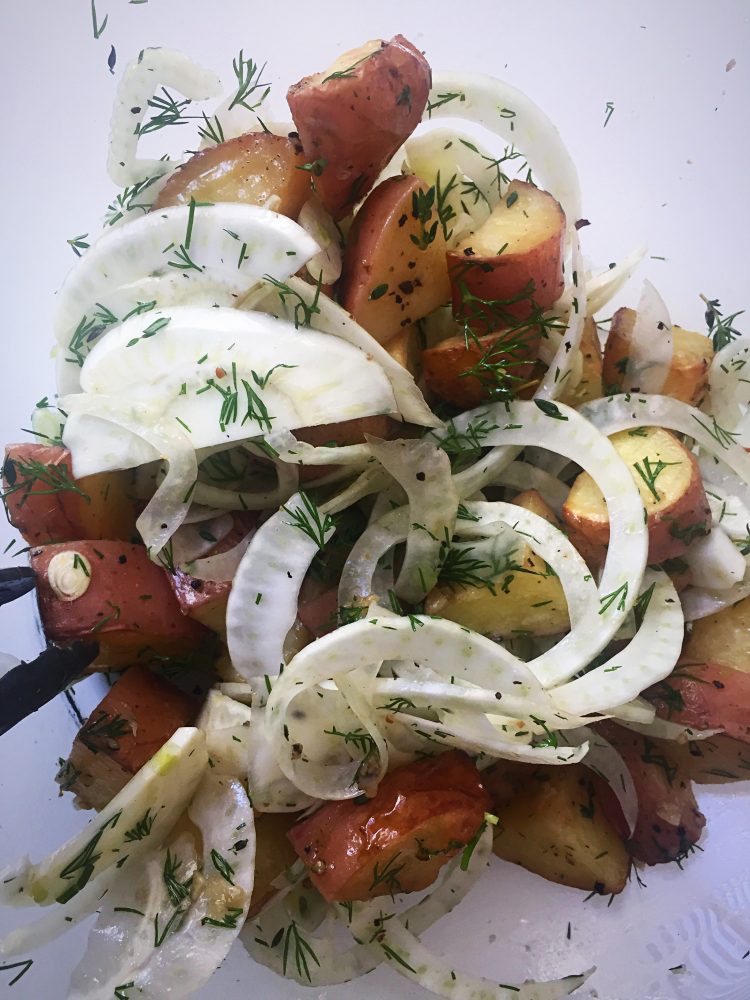
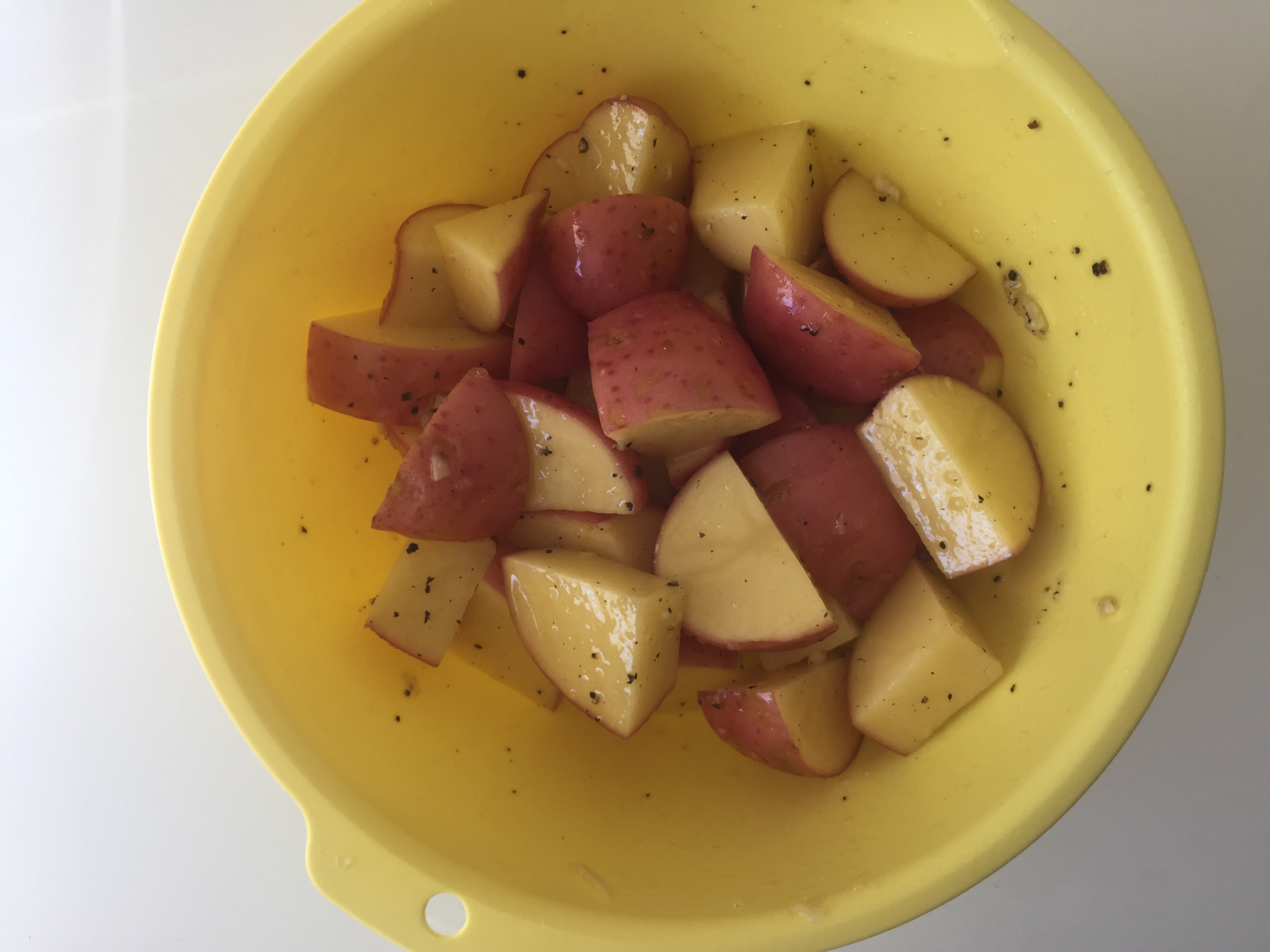
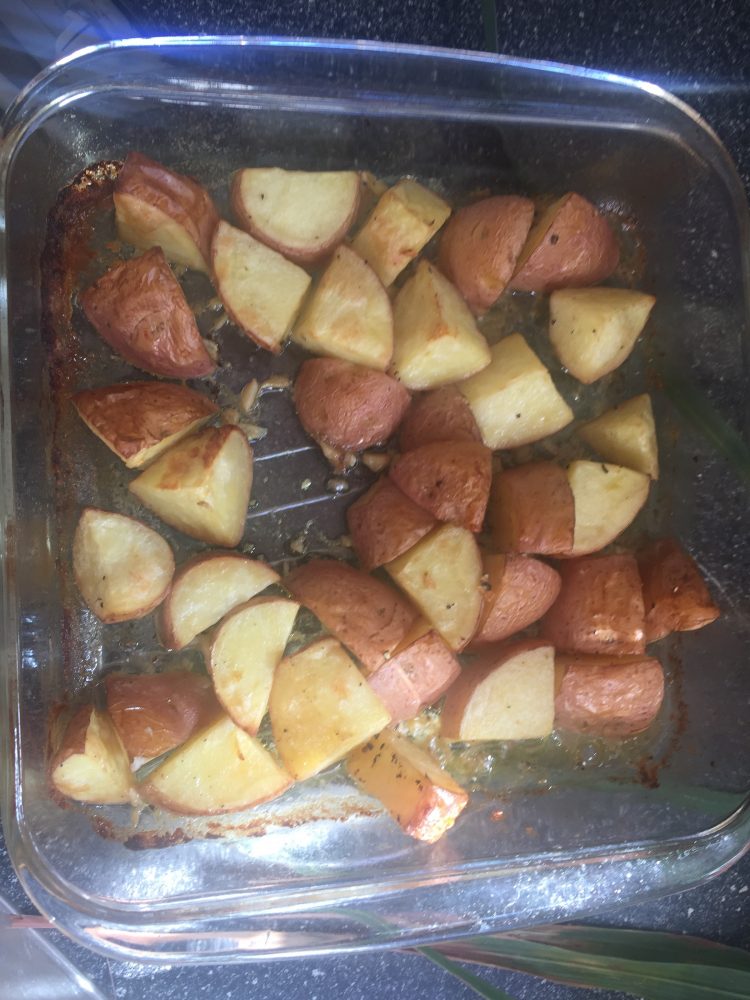
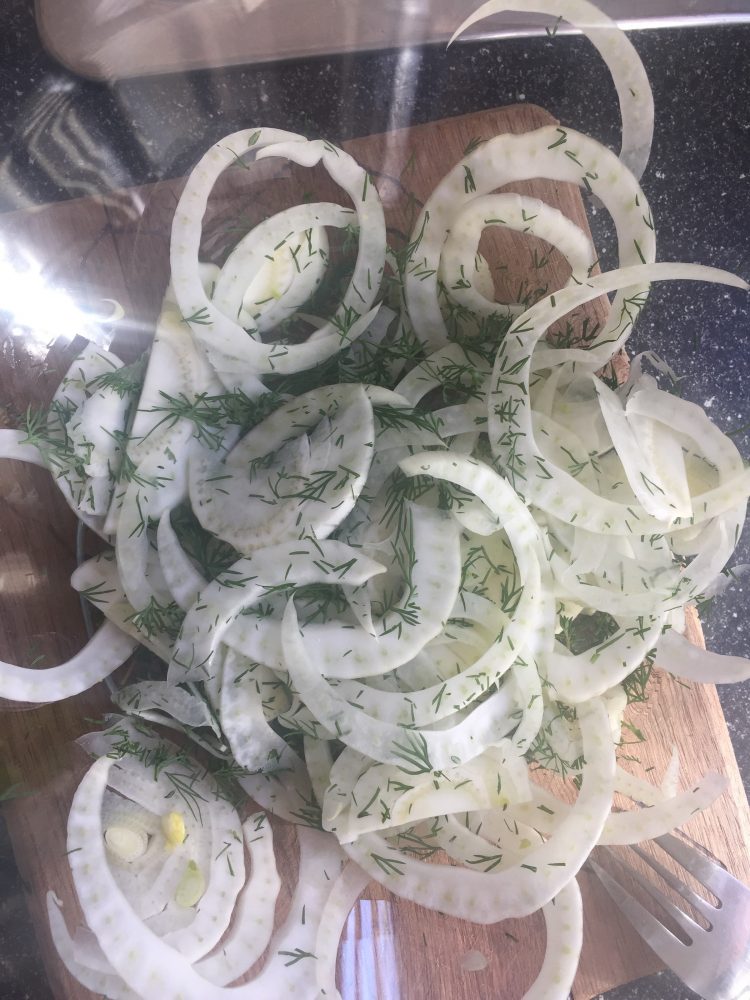
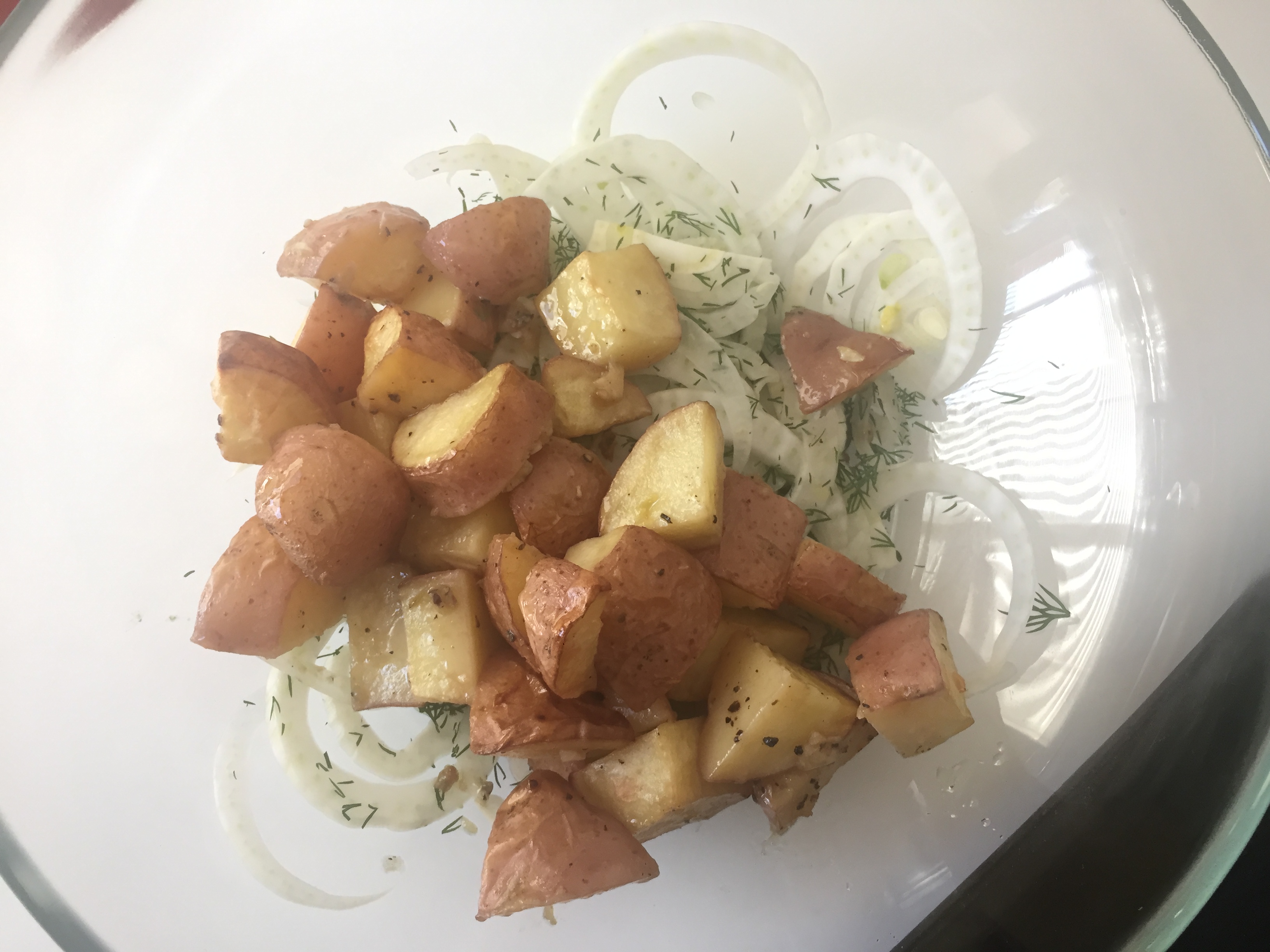
This salad is made with marinated baked potatoes and fennel. The reason I marinated the potatoes is because I find its more flavourful to marinate the potatoes than just season them before baking. Marinating the potatoes like meat allows the seasoning to seep into the potatoe flesh and provides more flavour to both inside and out of the cooked potatoes.


BAKED POTATOES FENNEL SALAD 

Prep-Time: 30 mins                 Serve: 3

Cooking Time: 45 mins

 Ingredients 

3 large potatoes, washed and chopped

1/2 large fennel, sliced

pinch of salt and pepper

2 cloves garlic, minced

A drizzle of olive oil

1/4 lime juice

2 fresh dill, chopped

4 fresh thyme, leaves

Method

Marinate the potatoes with salt, pepper, olive oil and garlic for 30 minutes.

 Preheat oven at 180°C fan force. Line the marinated potatoes in a baking tray and bake for 45 minutes to an hour. Remove from the oven and allow to cool.

Combine the herbs, fennel and cooled potatoes in a salad bowl. Add in the lime juice and season with salt and pepper. Mix the salad and serve with your preferred grilled meat or fish.


PAN SEARED SALMON

Salmon. What comes to mind when you hear someone mention salmon? I love salmon with the skin on, so I often remember the crispy skin and the tender flesh that often melts in my mouth especially when made into sushi, sashimi or pan seared… yummy! If I was born and lived in an area where salmon were in abundance like Vancouver or Japan I would probably eat sashimi everyday 😀 Isn’t it interesting though that salmon and other similar fish can be light in texture but filling at the same time and very addictive. So I guess I understand why most birds love them.

Salmon is very delicate and can be eaten raw, cooked or semi cooked, I guess depending on different people with different preferences. I don’t really mind as long as it’s clean when served raw and is crispy on the outside when cooked. Some people prefer them steamed and oven baked, not that there’s anything wrong with it, I just don’t like them soggy.

Growing up in a country where 98% of the time the population use fresh water fish in cooking rather than red meat or sea fish, I learned a few tricks from my mum and grandma about how to prepare and cook fish. The most common way of cooking fish is by cutting them into 3-5 (including heads) portions and then adding them into soups along with vegetables. Because most of the Cambodian households still don’t have access to electricity or cannot afford a fridge they use the traditional way of preserving meat, fish and poultry.  The other Cambodian ways of cooking fish are pan fried or open fire bbq. The fish is always seasoned with salt, sugar and stock powder and then left to marinate for 1 hour or over night before cooking. If the fish isn’t cooked the next day they are often left to dry in the sun for 2-3 days before storing. About 99.9% of the time the marinated fish is scored on both sides. Scoring fish before marinating them helps the seasoning seep into the flesh better and it also helps to cut down smaller bones that make it easier to eat.

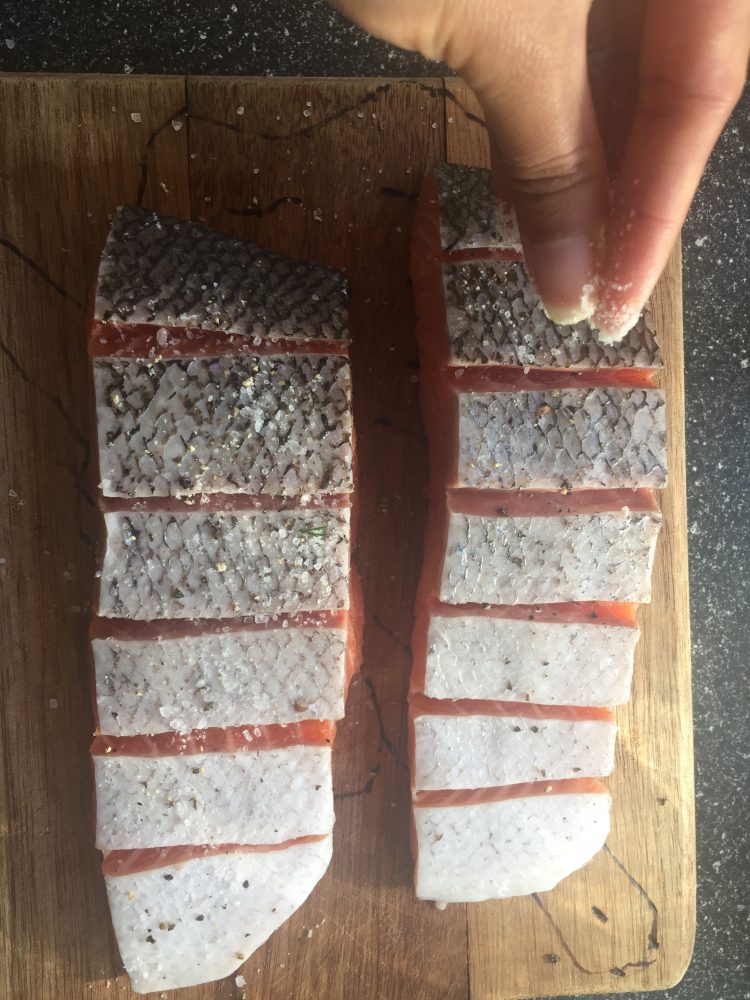
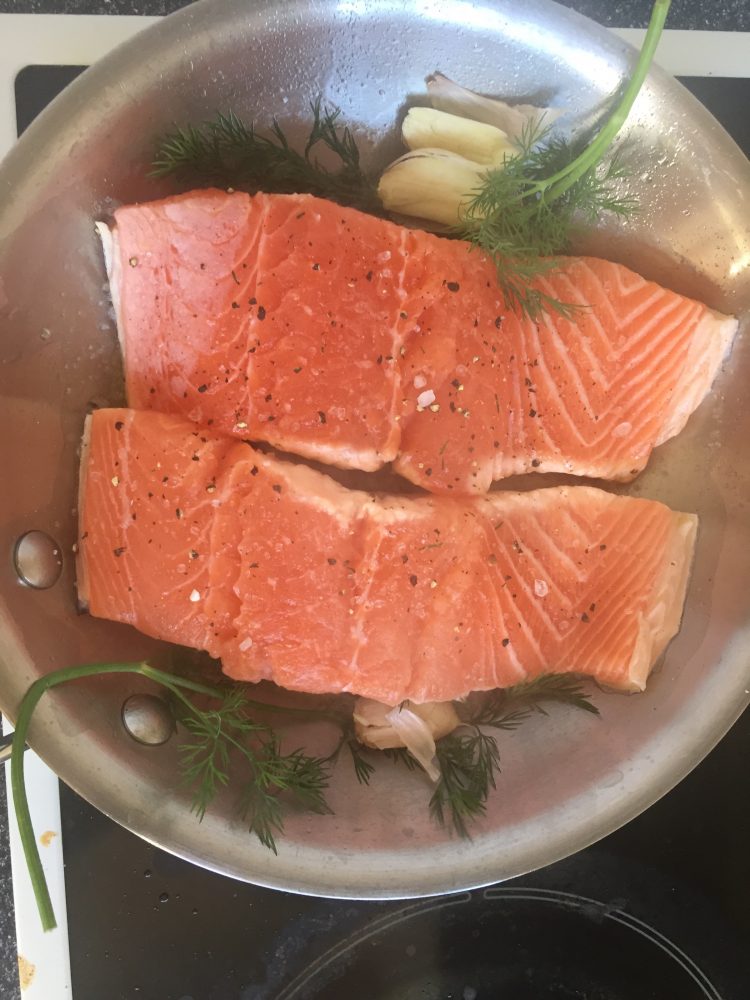
Note: make a few strip cuts on the skin with your knife about 1/3 cm deep. You don’t want to cut them deeper than that or they will break when cooking. When scoring the skin make sure your knife is very sharp, this will make it easier to score without damaging the flesh underneath the skin. Scoring fish, especially fillets also helps to make the scored side lay flatter in the pan that helps to cook them more evenly. If you want a big piece of crispy salmon skin I recommend skipping the scoring.

Doesn’t matter whether you decide to grill or bake the fish, never leave the seasoning out especially salt and pepper. Seasoning meat, fish or poultry before cooking helps to bring out its flavours more when cooking. When cooking the salmon, keep in mind to never flip the fish more than once. 

One thing I’ve been trying to mention is salt. From experience I’ve used table salt, Himalayan salt, rock salt and salt flakes. You know what, iodized rock/flake sea salt are the best choice, I personally say so because it is the most natural salt there is compared to others. Honestly we don’t need extra chemicals added to have a better salt taste. Most people are using pink Himalayan salt these days, I stopped using it because there were heaps and heaps of rocks among the salt which makes it hard to eat without biting in to a rock, the colour is pretty though. Just for thoughts, keep an open mind. 🙂


PAN SEARED SALMON

Prep-Time: 5 mins                 Serve: 2

Cooking Time: 10 mins

Ingredients 

2 salmon pieces with skin

Fresh grounded salt and pepper

2 stork fresh thyme

2 cloves garlic, crushed

2 tbsp olive oil

Method

Score the salmon skin with a sharp knife and then lightly sprinkle salt and pepper on top and in to the scored parts.

Heat the oil in a frying pan on medium heat and then add in the salmon, skin down once the oil is nice and hot. Add in the thyme, garlic and then sprinkle salt and pepper on the topside.

Cook for about 2-3 minutes before flipping it over. To be sure that the salmon are ready to be flipped over, by checking the lower part of the salmon to see if it’s cooked about 1/3 (bottom up) then it’s ready. Turn the salmon over.

Tilt the frying pan to one side, dish the oil with a spoon and pour it over the top of the salmon. This will help to cook the salmon evenly and keep the skin crispy. Continuously doing so for 2-3 minutes or until the other side of the salmon is cooked.

Flip the salmon over again so the skin side is face down on the pan; remove from heat and leave it to rest for about 8 minutes. Prepare your sides and ready to be served.