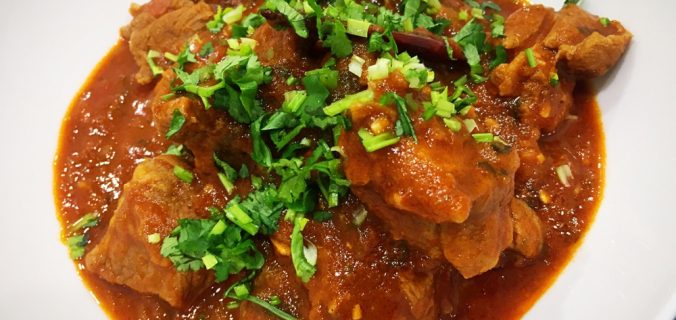
Who out there doesn’t like a good Indian curry? I assume not many, in fact I know my best friend doesn’t and not just Indian curries but every other type of curry as well and I don’t quite understand why! I know people have different tastes and that’s fair, but I love Indian curries. This lamb curry originates from South India and it is very popular in the Hyderabad region. The herbs and spices used in this curry are those that can also be used to make goat curry. To make this curry the spices are often added in their whole form and less of the grounded type, because of this the content of this curry is semi thick and the curry has a stronger and a fresher aroma compared to most curries from restaurants. Indians love their meat on the bones so when making curries they prefer meat pieces that have some amount of fat and bone rather than lean meat. The reason is because meat on the bones don’t get as dry as lean meat when cooked to tender and the fat helps to give the dish some extra flavour. However if you prefer a healthier curry like us, lamb leg on the bone is your best choice because the meat on the legs are lean but also have parts that are attached to the bones which are very beautiful when cooked to tender.
What fascinates me about Indian curries is that depending on the region, the methods and spices used the specific curry type differs slightly and depending on the type of meat used the curry base is also different. This recipe was taught to me by a friend who’s from South India and who cooks this curry a lot with lamb and goat. In Indian cuisine, spices are essential and therefore almost every dish of their food includes small or large amounts of spices so when I made my friend a dish that includes tomato or turmeric but isn’t a curry, my friend would still consider that as a curry. While I have learned the name and the uses of many Indian spices, I still come across new spices whenever I visit Indian/Sri Lankan grocery stores.
Note: when using lamb leg for this, remember to cut of the outer layer of fat if the leg comes with skin. If you want to make this curry with meat on the bone I recommend choosing the sirloin chop instead of lamb pieces. Sirloin chop often comes with marrow in the bones and a thin layer of fat and skin which make it easy to remove. The bones and marrow help to stock the curry which make it more flavourful.
This curry is a bit spicy so be mindful of the amount of chili you want to add into the curry if you can’t really handle the heat.
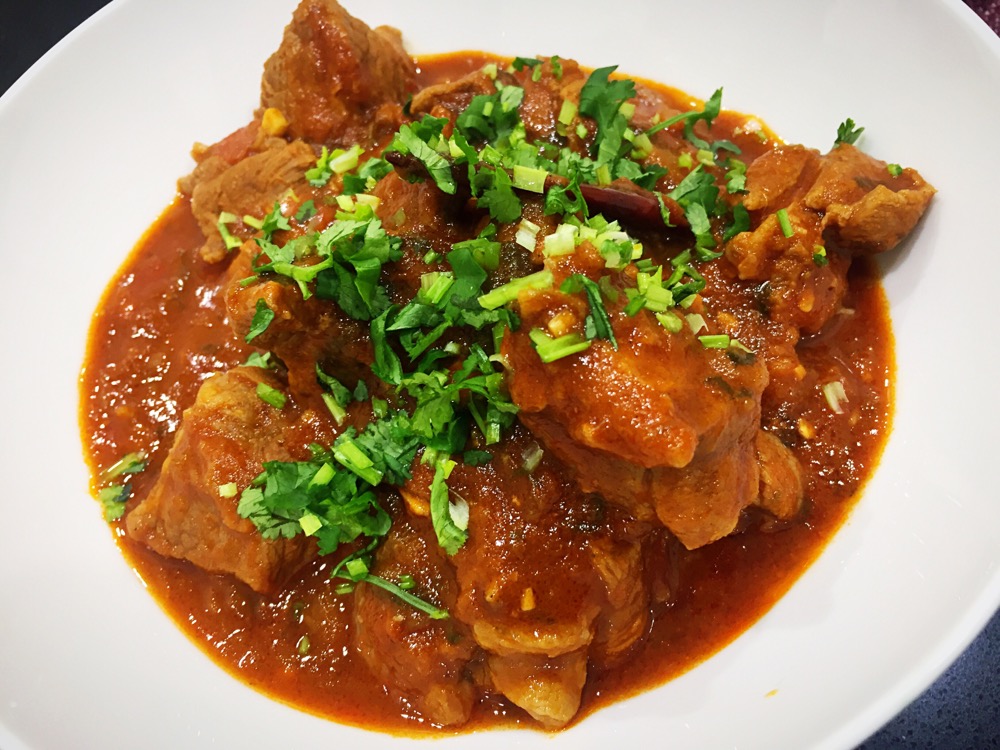
SOUTH INDIAN LAMB CURRY
Prep-Time: 15 mins Serve: 3-5
Cooking Time: 1 hr
Ingredients
1kg lamb leg/lamb sirloin chop, diced (with bone preferred)
4 tomatoes, chopped
1 large onion, chopped
1/2 bunch mint, chopped
1/2 bunch coriander, chopped
4 fresh green chillies, chopped (optional)
1 tbsp ginger garlic paste
2 cinnamon sticks
12 cardamom/ 1 tsp grounded cardamom
1 tsp garam masala
1 tsp grounded cumin
2 tsp grounded chillies
1 tsp turmeric
4 tbsp ghee/oil
Salt to taste
Method
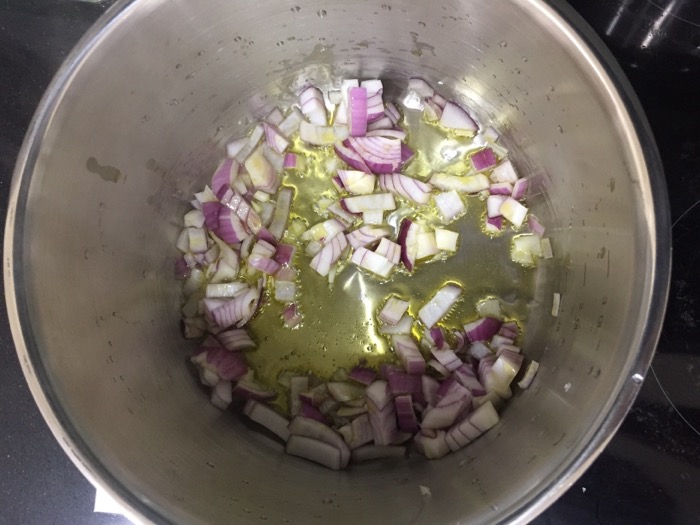
Heat the ghee in a pot over medium high heat and add in the onion once the ghee has been heated. Cook the onion thoroughly until it turns transparent. Add in the ginger and garlic paste and then cook until the ginger and garlic paste gives out fragrant.
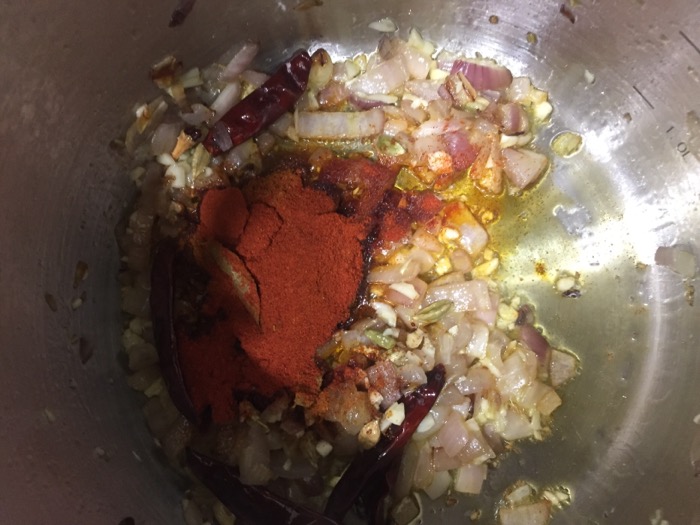
Toss in all of the spices, ground chillies, cardamom, turmeric, garam masala, cumin and cinnamon sticks. Dry roast the spices for 1 minute or two until you can smell the spices in the air (on low heat). Once the spices start to fragrant add in the tomatoes and then stir to mix with the roasted spices. Continue to stir to make sure that no spices stick to the bottom of the pot and burn.
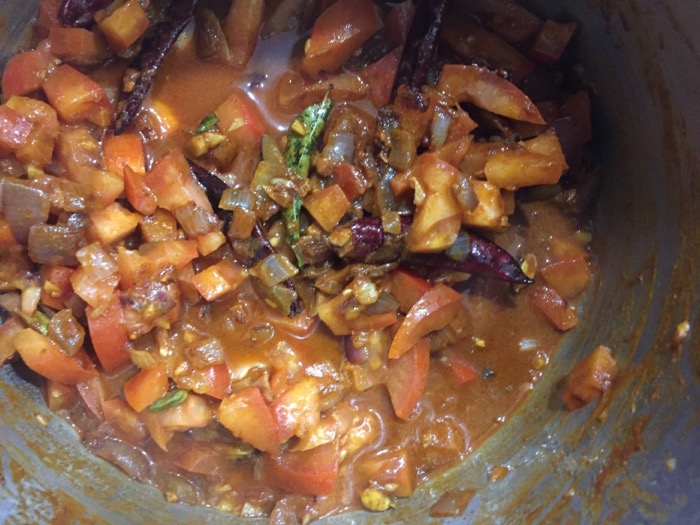
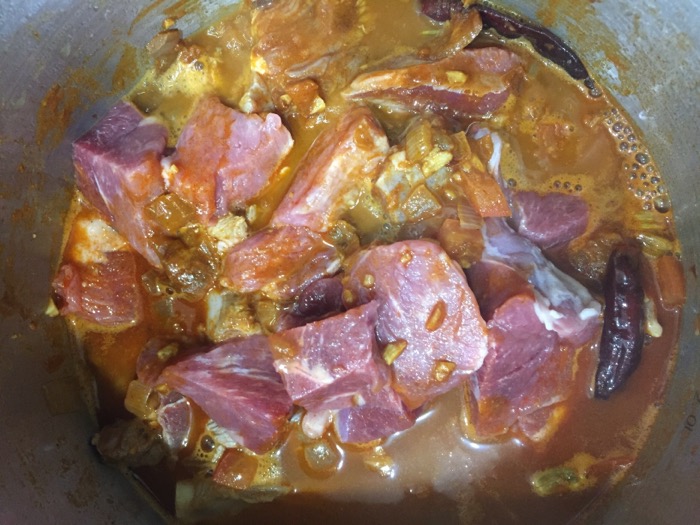
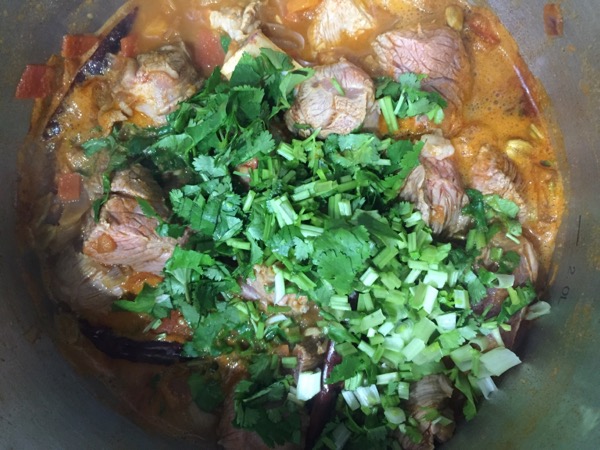
Adjust the heat again to medium high and cook the tomatoes until it starts to break down and then add in the lamb pieces, fresh chillies, mint, coriander and about a tablespoon of salt. Stir to combine and now add 2 cups of water into the pot. Bring the heat to high and then leave it to cook for 25 minutes, stir occasionally. After 25 minutes reduce the heat to medium and cook for a further 25 minutes or until the lamb is tender and the sauce is thickened. Remove from the heat and serve with basmati rice and/or rotti bread.